
Puppy Resource Guarding
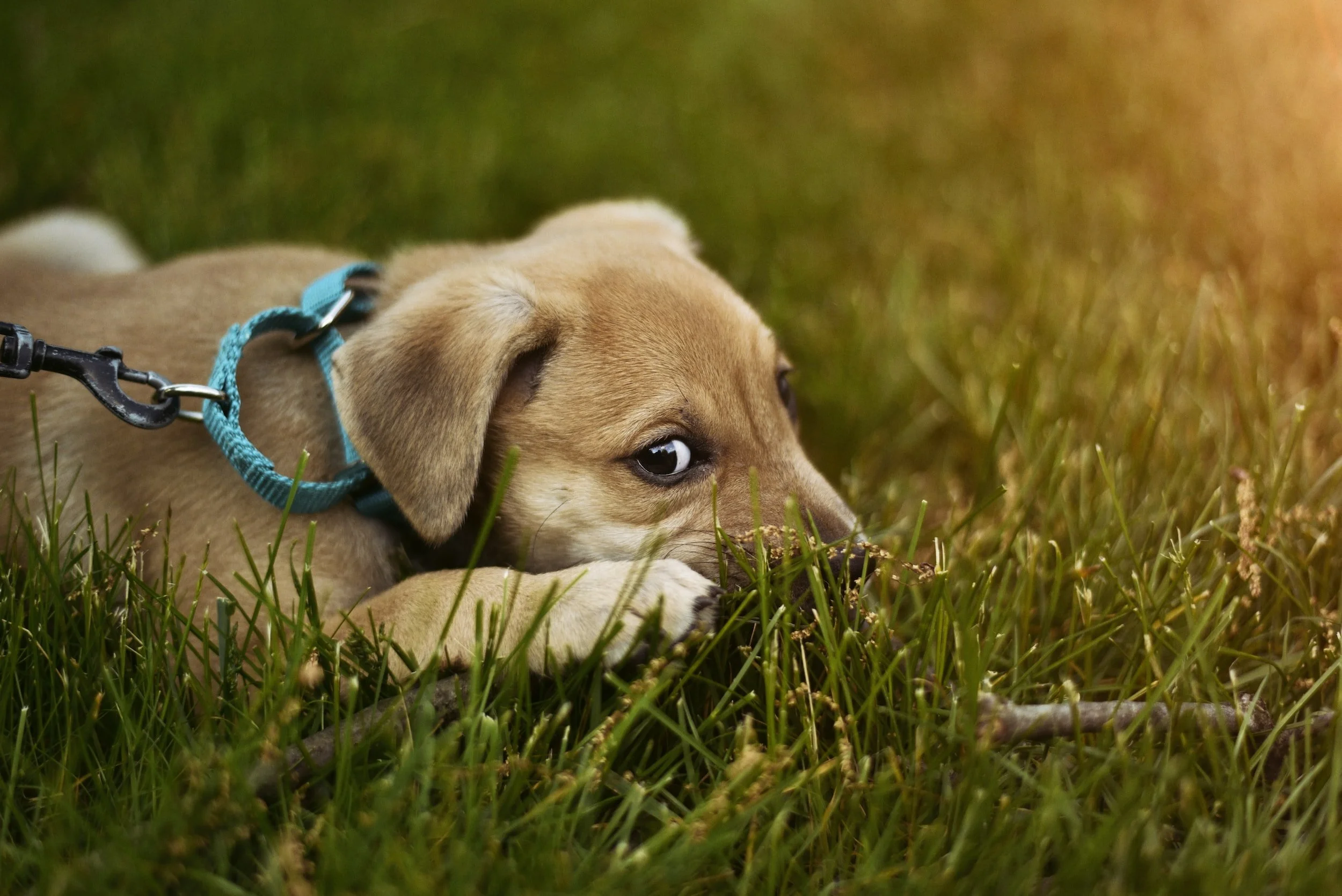
Puppy Resource Guarding: What It Means and How to Help
Resource guarding happens when a puppy worries that something valuable may be taken away. This could be food, a chew, a toy, a bed, a stolen item or even a favourite person.
It does not mean your puppy is naughty or trying to be in charge. The behaviour is usually driven by uncertainty or fear of losing something important. Responding calmly and appropriately can help prevent the problem from becoming more serious.
Recognising the early signs
Growling and snapping are obvious warnings, but puppies often show quieter signs first. These may include:
• Freezing or becoming very still
• Turning away or moving an item farther from you
• Hovering over an object
• Eating more quickly when someone approaches
• Staring or watching you closely
• Stiffening their body
• Lifting a lip, growling or snapping
A growl is valuable communication. Your puppy is telling you that they feel uncomfortable and need more space. Punishing the growl may stop the warning, but it does not change the feeling behind it. The puppy may then learn to skip the warning and move more quickly to a snap or bite.
What not to do
If your puppy guards something:
• Do not tell them off or punish them
• Do not reach towards them or try to grab the item
• Do not chase or corner them
• Do not repeatedly take away their food or belongings to “teach them who is in charge”
• Do not allow children to approach or remove anything from the puppy
These actions can increase your puppy’s anxiety and confirm that people approaching really do mean that something will be taken away.
Keep everyone safe
If you notice guarding behaviour, remain calm and give your puppy some space. If the item is harmless, it is often safest to leave them alone and allow them to finish with it.
Keep children and other animals away using a door, gate or puppy pen. Feed dogs separately and provide high-value chews in quiet areas where they will not be disturbed.
If your puppy has something dangerous, avoid trying to remove it by force. If it is safe to do so, you may be able to toss several high-value treats a short distance away so the puppy chooses to move from the object. Keep yourself well away from their mouth and seek professional advice if this happens regularly.
Notice when and why it happens
Keep a simple record of your puppy’s behaviour. Note:
• What they were guarding
• Who or what was nearby
• What happened immediately beforehand
• The time of day
• Whether the puppy was tired, hungry, excited or unsettled
• The signals they displayed
This can help you identify patterns and manage situations before your puppy becomes worried.
Help your puppy feel safer
Yes, training can help—but it must be gentle and carried out at a distance where your puppy remains relaxed.
Begin by walking past while staying far enough away that your puppy shows no signs of tension. Toss a particularly tasty treat towards them and then continue walking away. Do not try to take their item.
With repetition, your puppy can begin to learn that a person approaching brings something good rather than causing a loss.
Keep these sessions very short. If your puppy freezes, stares, eats faster, growls or moves over the item, you are too close. Move farther away and make the situation easier.
Teach a positive swap
Practise swapping with safe, low-value objects that your puppy is not worried about losing.
Offer a higher-value treat and wait for your puppy to release the object voluntarily. When they let go, say “Yes,” give them the treat and, when appropriate, return the original object.
Returning the object sometimes is important because it teaches your puppy that giving something up does not always mean losing it forever.
Never chase your puppy to retrieve an object. Chasing can turn stealing into a game or make the puppy more determined to protect what they have.
You can also teach cues such as “leave it” and “give” during separate, relaxed training sessions. Reward generously so that responding to you is always worthwhile.
When to seek professional help
Please seek help promptly if your puppy:
• Growls, snaps or bites
• Guards several different objects or areas
• Guards a person, bed or resting place
• Lives with children or other animals who may be at risk
• Is becoming more worried despite careful management
• Suddenly begins guarding when they have not done so before
A sudden change in behaviour can sometimes be connected to pain or illness, so your veterinarian should be your first point of contact. They can check for medical causes and refer you to an appropriately qualified behaviour professional if needed.
Resource guarding can improve, particularly when it is recognised early. The aim is not to prove that you can take things away. It is to help your puppy feel safe and learn that people approaching bring reassurance and good things.
If you are concerned about your puppy’s behaviour or would like help creating a safe training plan, please contact me to arrange a private consultation.