
Help! My Dog Hates The Car!
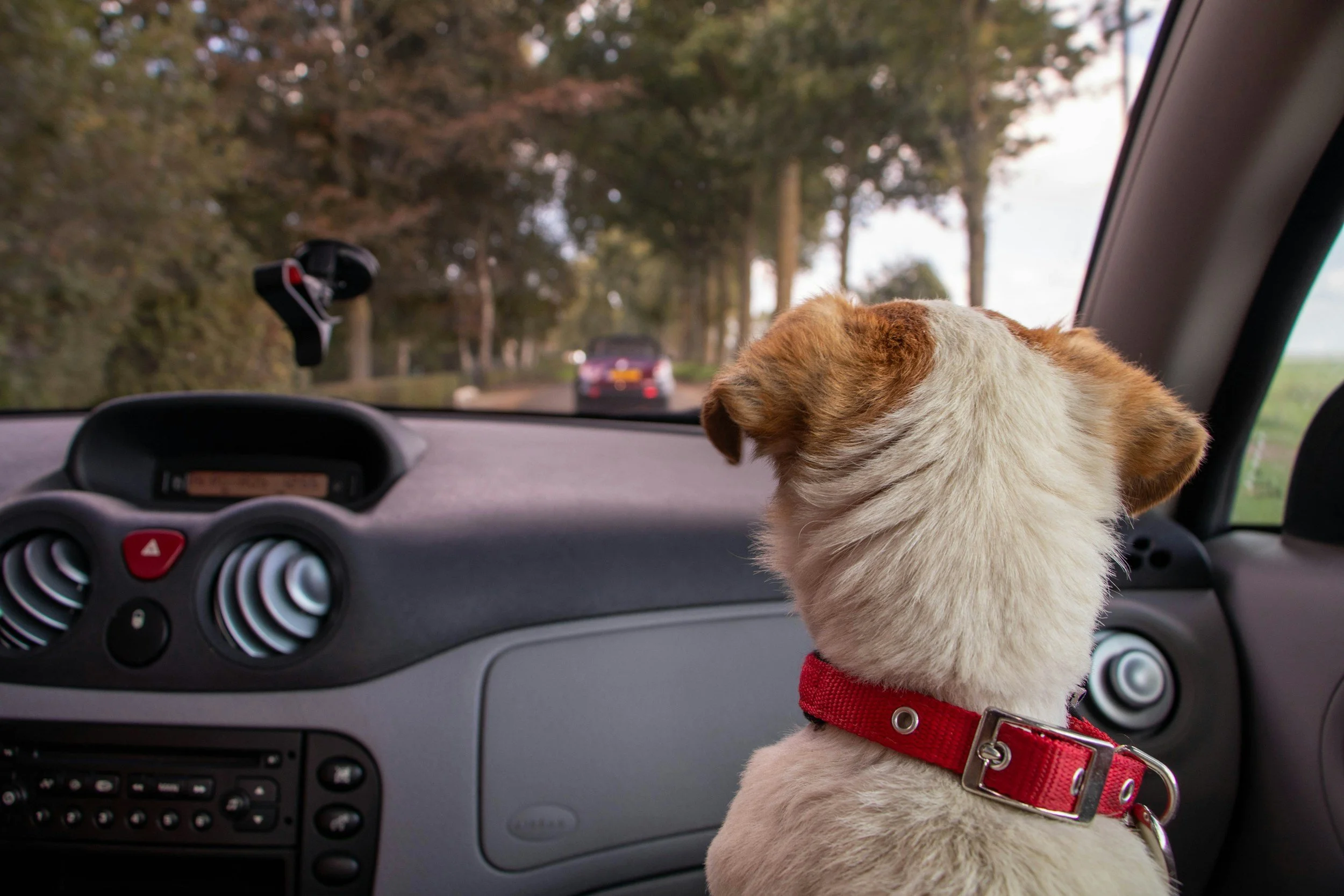
For some dogs, the sight of the car means an exciting adventure. For others, it brings worry, nausea or fear before the journey has even begun.
A dog who refuses to get into the car, trembles, pants, drools, whines, barks or tries to escape is not being difficult. Their behaviour is communicating that something about the experience feels unsafe or unpleasant.
The first step is to work out what may be causing that reaction.
Fear or Travel Sickness?
Fear of the car and travel sickness can look very similar. Some dogs may experience both.
Possible signs of travel sickness include:
• Excessive drooling or lip licking
• Repeated swallowing
• Yawning
• Restlessness
• Whining
• Vomiting
• Reluctance to enter the car
A dog who has felt sick during previous journeys may begin to worry as soon as they see the car. The car predicts feeling unwell, so the anxiety can begin before the vehicle moves.
If your dog drools heavily, vomits or appears physically unwell during travel, speak to your veterinarian. Treating nausea may be an important part of helping your dog feel comfortable.
Begin Outside the Car
There is no need to put your dog into the car immediately.
Start at a distance where your dog notices the vehicle but remains relaxed. Reward them for calmly looking at it, walking towards it or exploring nearby.
Allow your dog to move at their own pace. Do not pull them towards the car or lift them inside if they are frightened.
Keep each session very short and finish while your dog is still comfortable.
Introduce the Car Gradually
Once your dog is relaxed near the car, open a door and allow them to investigate.
You might place a familiar blanket or bed inside and scatter a few high-value treats near the entrance. At At first, your dog may only look through the open door. That is perfectly fine.
Reward each small step:
• Looking towards the open door
• Moving closer
• Sniffing the car
• Placing one paw inside
• Climbing in voluntarily
• Remaining inside calmly
Do not close the door or start the engine until your dog is completely comfortable with the previous step.
Make the Stationary Car a Pleasant Place
When your dog is happy to get inside, spend a few quiet minutes together while the car remains parked and switched off.
Offer treats, a favourite chew or calm praise. You could feed part of a meal in the car if your dog is comfortable and does not experience travel sickness.
Keep the doors open initially. When your dog is relaxed, practise closing a door briefly, then opening it again.
The aim is for the dog to learn that being in the car does not always mean an immediate journey.
Introduce the Engine
The sound and vibration of the engine can be frightening, so introduce this as a separate step.
Have another person start the engine while you remain with your dog. Mark calm behaviour with “Yes” and reward it.
Switch the engine off again after a few seconds.
Over several sessions, gradually increase the amount of time the engine runs. If your dog stops taking treats, tries to escape, freezes, pants heavily or becomes restless, they may be finding the step too difficult.
Return to an easier stage rather than pushing ahead.
Take Very Short Journeys
Once your dog is relaxed in the stationary car with the engine running, begin with an extremely short journey.
You might simply reverse out of the driveway and return, or drive a very short distance before coming home.
Gradually build from there:
Move the car only a few metres.
Drive around the block.
Take a short trip to somewhere quiet and enjoyable.
Slowly increase the length of the journey.
Avoid making every car trip end at the veterinary clinic or somewhere your dog finds difficult. Include short journeys that lead to a peaceful walk, an opportunity to sniff or another activity your dog enjoys.
Keep Your Dog Safe and Comfortable
Your dog should be securely restrained using a suitable travel crate, vehicle barrier or correctly fitted car restraint.
Make sure the car is well ventilated and kept at a comfortable temperature. Drive smoothly, avoid sudden braking and take regular breaks on longer journeys.
Never allow your dog to travel with their head out of the window, and never leave them unattended in a parked vehicle.
Watch What Your Dog Is Telling You
Progress is not measured by how quickly you complete each stage. It is measured by how comfortable your dog feels.
Watch for signs of concern, including:
• Turning away
• Refusing food
• Freezing
• Trembling
• Panting when it is not hot
• Trying to leave
• Excessive drooling
• Whining or barking
If these appear, pause and make the next session easier.
We wait, we have patience.
When to Seek Help
Speak to your veterinarian if you suspect travel sickness, pain or another medical concern.
Professional help is also recommended if your dog panics, attempts to escape, becomes aggressive or is unable to remain relaxed despite gradual training.
Some dogs need a carefully personalised behaviour plan, and medication may sometimes be recommended by a veterinarian alongside training.
With patience, small steps and plenty of positive experiences, many dogs can learn that travelling in the car is safe—and may even begin to enjoy the adventures it brings.